
by admin
Share
by admin
Share
AuKing Goes Deep at Tundulu with Diamond Drilling
The diamond rig is on the ground and turning. AuKing Mining (ASX: AKN) has closed out the RC phase of its maiden Tundulu campaign with carbonatite in 28 of 31 holes, and is now drilling the deepest holes the project has ever seen. The next two months could be the busiest in the company's recent history.
The headline: 4,300 metres down, 10,000 to go
AuKing has completed the reverse circulation (RC) leg of its maiden program at the Tundulu Rare Earths Project in southern Malawi. The tally: 4,300 metres across 31 holes, all logged, all done, and all inside a program that only kicked off in early June.
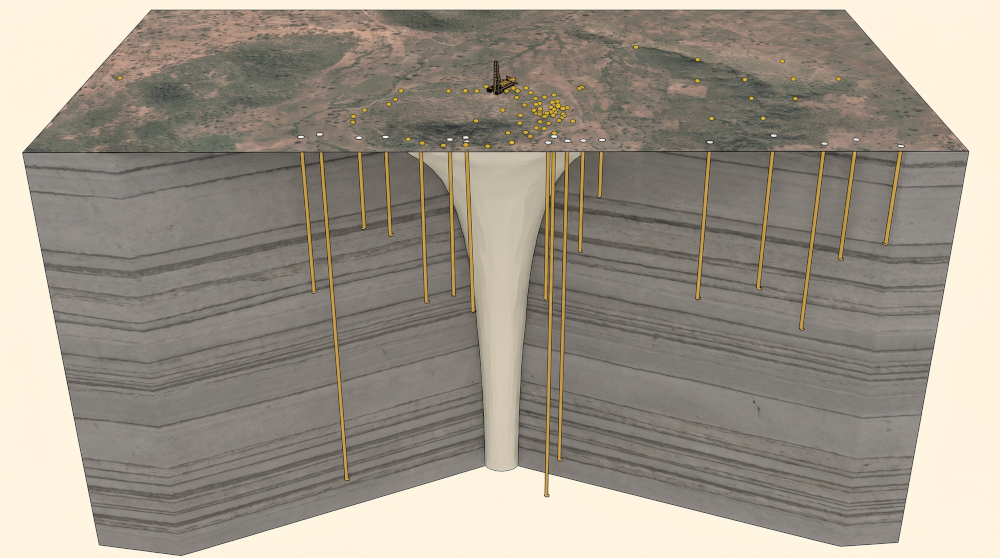
The RC rig has now been demobilised and replaced by a diamond rig, with up to 10,000 metres of diamond drilling planned for the remainder of 2026. That is not a typo. AuKing intends to run two shifts across every 24-hour period, targeting an average of 80 metres of core per day.
For a company that started the year without this asset on its books, that is a serious change of pace.
The number everyone is talking about: 28 out of 31
Geological logging has confirmed carbonatite intersections in 28 of the 31 RC holes, a 90% hit rate, with cumulative logged carbonatite exceeding 2,100 metres across the program. Seven holes contain more than 100 metres of logged carbonatite each.
Why does that matter? Carbonatite is the host rock for some of the world's most commercially significant rare earth deposits. Hitting it in nine holes out of every ten, across a spread of targets, points to an intrusive complex with real continuity and real scale.
Crucially, the hits are not confined to Nathace Hill, the area that soaked up almost all of the historical drilling. Step-out holes designed off the back of AuKing's recent airborne magnetic survey came in with carbonatite too, in areas to the west and north-east of the main zone. The geophysics called it, the drill bit confirmed it. That is exactly the sequence explorers want to see.
Validating the history books
Two of the first holes drilled, 26NH004 and 26NH005, were deliberately collared alongside historical drillholes. No previous explorer retained RC chips or core, so AuKing needed to prove that the old logs could be trusted before leaning on them for future resource work.
The result: oxidised ferruginous carbonatite intervals with abundant dark carbonate-rich fragments and pervasive iron oxide and goethite alteration, interlayered with highly magnetic mafic dolerite. The lithologies line up with the historical records, and the mafic dolerite intersections turned up within a few metres of previously reported depths.
In other words, the historical dataset is looking reliable. For a project whose investment case leans heavily on decades-old phosphate drilling that happened to hit rare earths, that is quietly one of the most valuable outcomes of the whole RC phase.
What the diamond rig is chasing
The diamond program is a mix of fresh holes from surface and diamond tails extending selected RC holes that already bottomed out around 150 metres. The mission is depth continuity beneath three areas: Nathace Hill, Tundulu East and Kamilala Hill, including two planned holes in the order of 500 metres each around Nathace Hill.
Core will also feed preliminary metallurgical and mineralogical testwork. That is the unglamorous but essential work that separates a geological curiosity from a project with a development pathway.
All of it is pointed at one milestone: an initial mineral resource estimate at Tundulu, targeted for late this year or early 2027, timed to land during the local wet season when field activity naturally slows.
The assay pipeline is loaded
Here is where the next chapter of news flow comes from. Exporting samples out of Malawi requires permits, and AuKing has been working through them batch by batch.
| Status | Batches | Samples |
|---|---|---|
| In preparation and assay with Intertek | 1 to 4 | 2,360 |
| Export approved, dispatching to Intertek Zambia | 5 | 632 |
| Export permit approval pending | 6 to 8 | 1,516 |
| Approved to date | 5 permits | 2,992 |
Assays from the first four drill holes are expected in the near term, with a substantial volume of data flowing to the ASX over the next six to eight weeks. By the time that queue clears, diamond core samples will already be moving through the same export and assay pipeline.
The Company expects continuous news flow to run through to the back end of 2026. For anyone following the story, that is the practical takeaway: this is about to become a very noisy few months.
How AuKing got here, and why the story has momentum
A quick recap for readers coming in cold.
April 2026. AuKing announced the acquisition of 100% of Tundulu from Tusker Minerals (ASX: TSK) and its Malawian subsidiary Green Exploration, in a staged cash, share and performance share package, supported by a $3 million placement. Part of the consideration is tied to delivering a JORC resource of at least 25 million tonnes at 1.25% TREO, which neatly aligns deal value with exploration success.
The historical grades that drew them in. Drilling by JICA in 1987 and Mota-Engil / Optichem in 2014 and 2015, both originally chasing phosphate, returned intervals including 41 metres at 3.7% TREO from 8 metres, 35 metres at 2.7% TREO from 15 metres, and 30 metres at 4.03% TREO from surface. Twenty-four historical holes ended in mineralisation, eight of them above 2% TREO. The mineralisation profile is notable for its heavy and medium rare earth content alongside low uranium and thorium, which matters a great deal for downstream processing.
June 2026. A high-resolution drone-based magnetic and LiDAR survey reframed Tundulu entirely, shifting it from a surface rare earth occurrence to a district-scale alkaline carbonatite system roughly 5 kilometres in diameter, with multiple targets under shallow cover. Six carbonatite complexes have been interpreted. AuKing has now drilled into three of them. Makhanga Hill, Namuka Hill and Chigwakwalu Hill remain untested.
July 2026. An oversubscribed $5 million placement allowed AuKing to upsize the campaign, taking the maiden program from an initially planned 10,000 metres to a proposed 15,000 metres of combined RC and diamond drilling.
The tenure position. Tundulu sits within Exploration Licence EL0731/24, granted on 27 May 2024, covering approximately 91.5 square kilometres, around 90 kilometres east of Blantyre and accessible by road. The licence transfer to AuKing's subsidiary Tundulu Rare Earths Limited is still working through the Malawi Mining and Minerals Regulatory Authority. In the meantime, an earn-in agreement with Tusker and Green Exploration gives AuKing contractual authorisation to keep exploring, which is precisely why the rigs have not stopped turning.
The neighbourhood. Tundulu sits in an emerging rare earths district in southern Malawi, in the same postcode as Lindian Resources' Kangankunde project.
What to watch next
The bottom line
AuKing has done what it said it would do, on roughly the schedule it said it would do it. Thirty-one RC holes drilled, 90% carbonatite hit rate, historical data validated, geophysical targets confirmed, nearly 3,000 samples cleared for export, and a diamond rig now turning on the deepest holes ever drilled at Tundulu.
The geology is delivering. The assays will decide the rest, and they are close.